
How to Choose the Right Grease Gun for Your Application

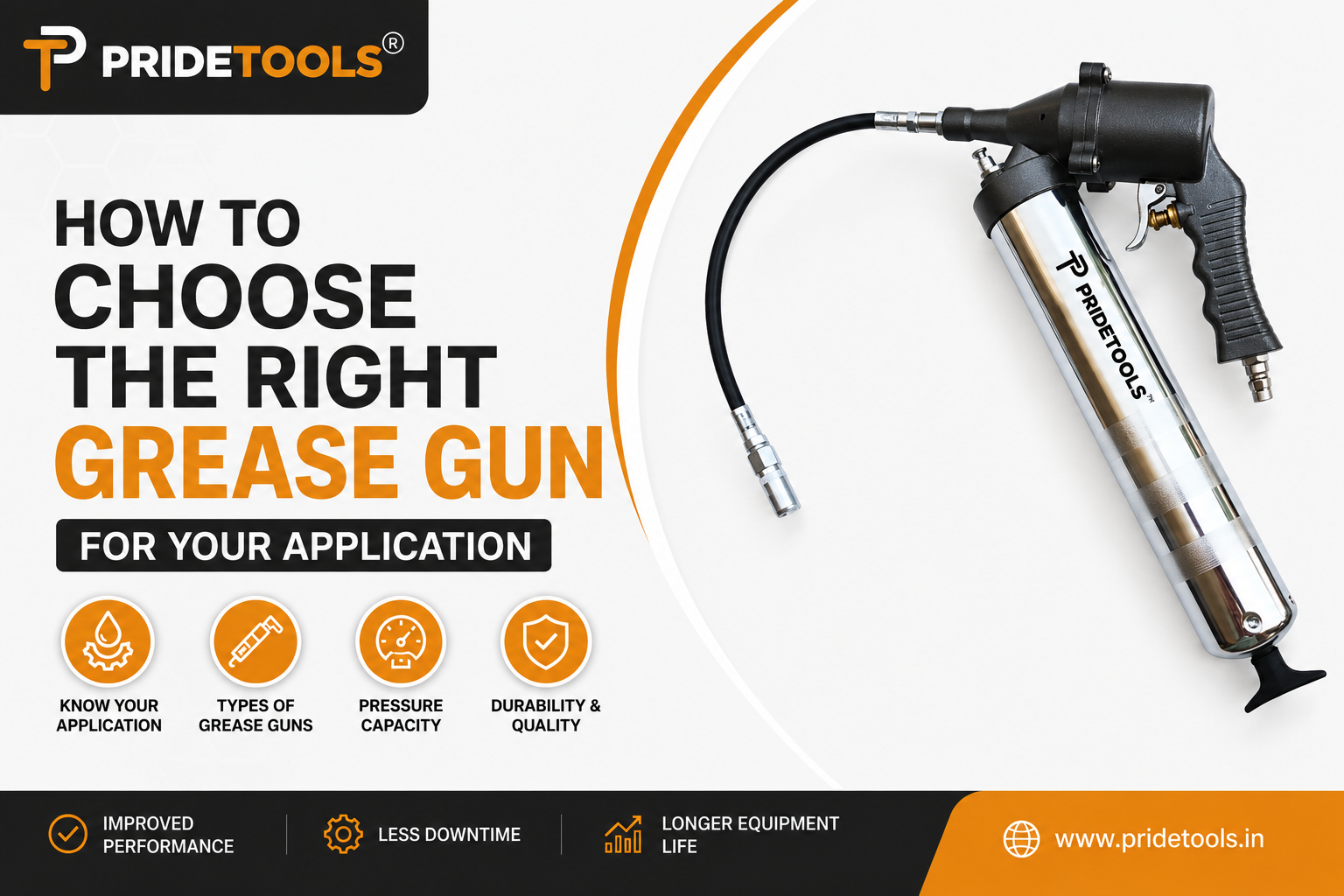
The selection of the proper Grease Gun will depend on the kind of equipment that you work with, the frequency of the lubrication, the amount of grease used, and even your environment. Manual grease guns are perfect for maintenance tasks done occasionally, while pneumatic and battery-operated ones would be great for large volumes of industrial maintenance work. Choosing the grease gun with the proper pressure capability, suitability to the grease cartridges or bulk grease, easy handling, and sturdiness guarantees efficient lubrication, reduces the wear of the equipment, and increases the lifetime of the machinery.
Important Points
- Choose the Grease Gun according to your equipment, load, and frequency of lubrication.
- Think about a manual, pneumatic, or battery-operated grease gun, depending on your operations.
- Choose the grease gun that offers sufficient pressure and grease quantity.
- Choose the one that is suitable for your grease cartridges or bulk grease.
- Picking the ergonomically designed grease gun guarantees comfort.
- Maintenance of the grease gun regularly enhances its performance and service life.
What You Need to Know?
A Grease Gun is an essential maintenance tool used to apply grease precisely to bearings, joints, bushings, and other moving components. Proper lubrication reduces friction, protects parts from corrosion, and enhances overall equipment performance.
Different industries—including manufacturing, construction, agriculture, automotive, and mining—have unique lubrication requirements. As a result, selecting the right grease gun is not simply about purchasing a tool; it is about choosing equipment that supports your maintenance strategy and operational efficiency.
The right grease gun ensures grease reaches every lubrication point effectively without over-lubricating or under-lubricating critical components.
Important Factors
When selecting a grease gun, consider the following factors:
1. Type of Grease Gun
Different grease guns serve different applications.
- Manual Grease Guns – Suitable for occasional maintenance and smaller equipment.
- Lever Grease Guns – Deliver high pressure for demanding lubrication tasks.
- Pistol Grip Grease Guns – Easier to operate with one hand and ideal for confined spaces.
- Pneumatic Grease Guns – Excellent for workshops and industrial environments with compressed air systems.
- Battery-Operated Grease Guns – Best for high-volume lubrication with minimal operator effort.
2. Pressure Requirements
Some machinery requires grease to be delivered under high pressure to reach tight or clogged lubrication points. Verify that the grease gun can generate sufficient operating pressure for your equipment.
3. Grease Output
The amount of grease dispensed per stroke directly impacts maintenance speed and accuracy. High-output models are ideal for heavy equipment, while controlled-output models provide greater precision for delicate components.
4. Cartridge Compatibility
Choose a grease gun compatible with:
- Standard grease cartridges
- Bulk grease filling
- Suction loading systems
Compatibility simplifies maintenance and reduces downtime during refilling.
5. Working Environment
Operating conditions influence the ideal grease gun.
Consider:
- Dusty construction sites
- Agricultural fields
- Manufacturing plants
- Automotive workshops
- Outdoor maintenance operations
Durable, corrosion-resistant construction ensures reliable performance in demanding environments.
6. Ergonomics
Comfort matters, especially for technicians performing repetitive lubrication tasks. Features such as comfortable grips, balanced weight, and smooth trigger operation improve productivity and reduce fatigue.
Benefits / Advantages
Selecting the right Grease Gun and proper lubrication schedule offers several important advantages.
- Improved Equipment Reliability- Consistent lubrication protects moving parts from excessive wear and premature failure.
- Reduced Downtime- Proper lubrication minimizes unexpected equipment breakdowns and maintenance interruptions.
- Increased Productivity –Efficient lubrication procedures allow maintenance teams to service more equipment in less time.
- Lower Maintenance Costs- Well-lubricated machinery experiences fewer repairs, reducing replacement part expenses and labor costs.
- Longer Equipment Life- Maintaining proper lubrication extends the operational life of bearings, gears, bushings, and other critical components.
- Better Grease Control- A quality grease gun delivers grease accurately, minimizing waste and preventing over-lubrication.
Why It Matters?
Lubrication is one of the simplest yet most important preventive maintenance practices. Even high-quality machinery can experience premature wear if lubrication is inconsistent or inadequate.
Using the appropriate grease gun helps maintenance professionals deliver the correct amount of lubricant exactly where it is needed. This improves machine efficiency, reduces friction, lowers operating temperatures, and supports uninterrupted production.
Whether maintaining agricultural machinery, construction equipment, industrial machines, or automotive components, the right lubrication tool contributes directly to equipment reliability and operational success.
Common Mistakes to Avoid
Avoid these common grease gun selection mistakes:
- Choosing a grease gun based solely on price.
- Ignoring pressure and grease output requirements.
- Using the wrong grease type for the application.
- Selecting a tool incompatible with the available grease cartridges.
- Over-lubricating or under-lubricating equipment.
- Neglecting regular cleaning and maintenance of the grease gun.
- Using damaged hoses or worn couplers that reduce lubrication efficiency.
Expert Insights
Maintenance professionals recommend evaluating the entire lubrication process before purchasing a grease gun. Instead of focusing only on the tool itself, consider equipment type, lubrication intervals, accessibility of grease fittings, and maintenance frequency.
For industrial operations with multiple machines, pneumatic or battery-operated grease guns often improve productivity and consistency. Smaller workshops or occasional maintenance tasks may benefit from manual or pistol grip models due to their simplicity and cost-effectiveness.
It is also advisable to purchase grease guns manufactured from high-quality materials with durable seals and reliable couplers. Investing in dependable equipment helps reduce maintenance interruptions and delivers long-term value.
Frequently Asked Questions
What is the best grease gun for industrial applications?
Pneumatic and battery-operated grease guns are generally preferred for industrial environments because they deliver consistent grease output with less operator effort.
How do I know which grease gun pressure I need?
The required pressure depends on your machinery and lubrication points. Heavy equipment and difficult-to-access fittings typically require higher-pressure grease guns.
Can one grease gun be used for different types of grease grades?
It is generally recommended to dedicate one grease gun to a specific grease grade to prevent contamination and maintain lubricant performance.
How often should a grease gun be maintained?
Inspect the grease gun regularly, clean it after use, check hoses and couplers for wear, and replace damaged components as needed to ensure reliable operation.
Is a manual grease gun suitable for professional use?
Yes. Manual grease guns are suitable for light-duty and moderate maintenance tasks, especially where lubrication is performed occasionally.
Final Takeaway
Choosing the right Grease Gun is an important step in building an effective maintenance program. By considering factors such as application, operating environment, pressure requirements, grease output, and ease of use, you can select a tool that improves lubrication accuracy, extends equipment life, and reduces maintenance costs. Investing in a high-quality grease gun is a practical decision that supports long-term productivity and equipment reliability. Pride Tools offers dependable lubrication solutions designed to meet the demands of industrial, automotive, agricultural, and construction applications, helping professionals maintain their equipment with confidence.